
Using Proxy-Status to diagnose intermediary failures
Parse structured Proxy-Status data, keep it distinct from HTTP status, and avoid turning diagnostics into infrastructure disclosure.
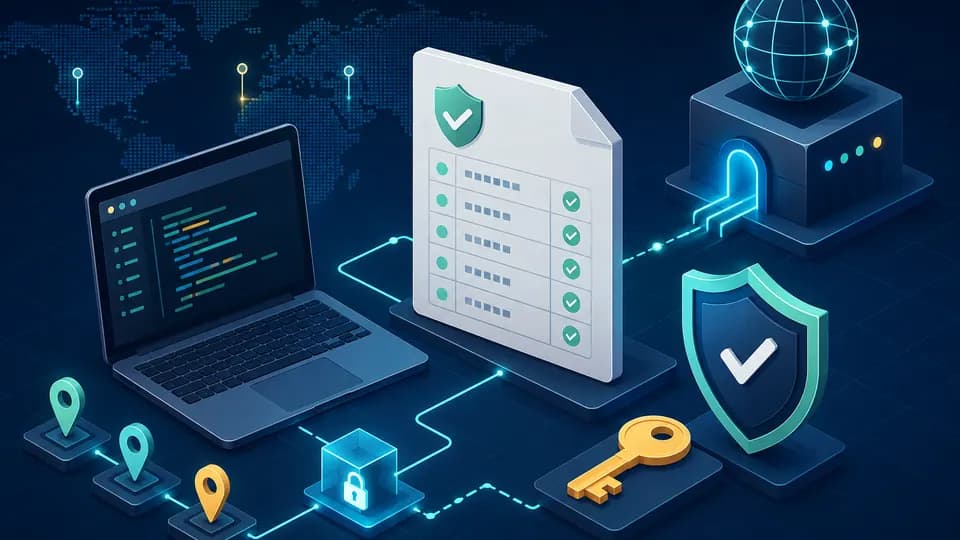
Parse structured Proxy-Status data, keep it distinct from HTTP status, and avoid turning diagnostics into infrastructure disclosure. This original WorldProxy guide cross-checks five standards and official sources, ties each conclusion to an observable stage, and uses only owned or explicitly authorized systems.
Core idea
Proxy-Status lets an intermediary describe itself and an error category using a structured field. It supplements rather than replaces HTTP status and transport errors, which can describe different layers.
For Using Proxy-Status to diagnose intermediary failures, separate the protocol specification from product features. A standard defines message formats and required behavior; a service separately defines geography, rotation, duration, and supported commands. This explains why clients accept different connection formats or omit an optional protocol capability.
What the primary source establishes
Parse structured Proxy-Status data, keep it distinct from HTTP status, and avoid turning diagnostics into infrastructure disclosure.
The primary source, RFC 9209 — Proxy-Status, RFC 9651 — Structured Fields, RFC 9110 — HTTP Semantics, RFC 9112 — HTTP/1.1, RFC 9205 — HTTP Design, defines the technical baseline but not every client and provider configuration. Read the normative behavior with its version and then verify your implementation. Treat anything beyond the source as a product feature that needs separate confirmation.
Controlled lab
Create owned 200 and delayed routes, plus test names resolving to NXDOMAIN and a closed port. Require four distinct safe outcomes. Feed a malformed Structured Field to the parser and verify that partial garbage is rejected rather than treated as authoritative diagnostics.
Step-by-step verification
Configure an owned reverse proxy for origin success, DNS failure, connect timeout, and response timeout. Parse each header with a Structured Fields implementation and correlate it with the intermediary log using a request ID.
Build a capability matrix for address syntax, TCP or UDP, DNS location, authentication, and IPv6. Fill it from client and service documentation. Test one capability at a time on an endpoint you control, starting with basic TCP before DNS, TLS, and the application flow.
Record whether failure occurred during address parsing, authentication choice, tunnel creation, TLS, or the origin response. SOCKS errors, HTTP CONNECT rejection, and an origin 403 need different remedies even though all can look like an unopened page.
- Create four controlled outcomes
- Parse the structured field
- Correlate request IDs
- Reject a malformed header
Evidence to retain
Retain time, request ID, HTTP status, transport outcome, parsed Proxy-Status elements, and the matching internal category. Redact topology and raw exceptions.
Capture the protocol version, client command, masked destination, intermediary code, and origin code. State who resolved DNS. Packet captures belong only on an isolated test setup and should omit payload; a sanitized verbose client log is usually sufficient.
Define report columns and time format before the run. A result without context becomes a guess: the address, cache state, and changed condition are unknown. Record controlled failures as well as successes so the check proves that it can distinguish states.
Interpreting the result
The field narrows a stage but cannot prove root cause without server evidence. Keep internal names, addresses, keys, and raw exceptions out of details; expose stable categories and a safe node label.
The field may be absent, removed by another intermediary, or deliberately terse. It does not replace tracing and origin metrics.
One successful run confirms only one client, route, and moment. Repeat while changing one variable and state the limits. When observation conflicts with documentation, rule out cache, client version, and intermediaries before creating a reproducible support case.
Worked decision process
For Using Proxy-Status to diagnose intermediary failures, use a matrix with capability, specification, proxy service, client, and verified behavior. Remote DNS or UDP may exist in a standard yet be unavailable in one library. Only the intersection is a supported workflow.
Capture the smallest useful trace: intermediary address, command, masked destination, intermediary result, TLS state, origin result, and DNS resolver. This separates syntax, policy, network, and origin failures without retaining payload or credentials.
Verify a second client version, one alternative address form, and a controlled failure. Publish version and platform limits beside connection examples. One successful implementation is not evidence for every client.
Common mistakes
Do not equate SOCKS5 with encryption, expect UDP from every client, omit brackets around IPv6 plus port, or treat HTTP/2 as a speed guarantee. Verify the implementation: a standardized command may be intentionally unsupported by the product or library.
Stop when errors rise, a source returns a limit, the task would require bypassing protection, or secrets enter logs. Save sanitized diagnostics and correct the cause first. More concurrency or another IP can hide the fault and add load without improving evidence.
Rollout and maintenance criteria
Define the decision boundary before rollout: which observation permits continuation, which requires review, and which stops the workflow. Record acceptable error ratio, maximum wait, and the owner of every exception so a temporary failure cannot silently become permanent configuration.
Review real load, cost, and quality after the first week. Schedule a small control after client, proxy-service, or network changes. Archive outdated instructions with their replacement date and reason so operators do not follow conflicting configurations.
Operational checklist
Turn the successful experiment into a short procedure covering owner, safe configuration, limits, and stop conditions. Every run needs a terminal status. After browser, library, or network changes, run a small control before the main queue.
- Protocol version is named
- Client capabilities are verified
- DNS path is explicit
- Proxy and origin codes differ
- The first test is minimal
- Unsupported features are not promised
Sources
This WorldProxy article is original. Links point to the primary documents used for fact checking.
Choose a proxy for your workflow
Compare proxy families and browse all countries. Availability and price are checked before an item enters the cart.