
Compression and traffic accounting: file size versus wire bytes
Separate representation size, encoded and decoded body sizes, and network transfer under gzip, Brotli, and connection reuse.
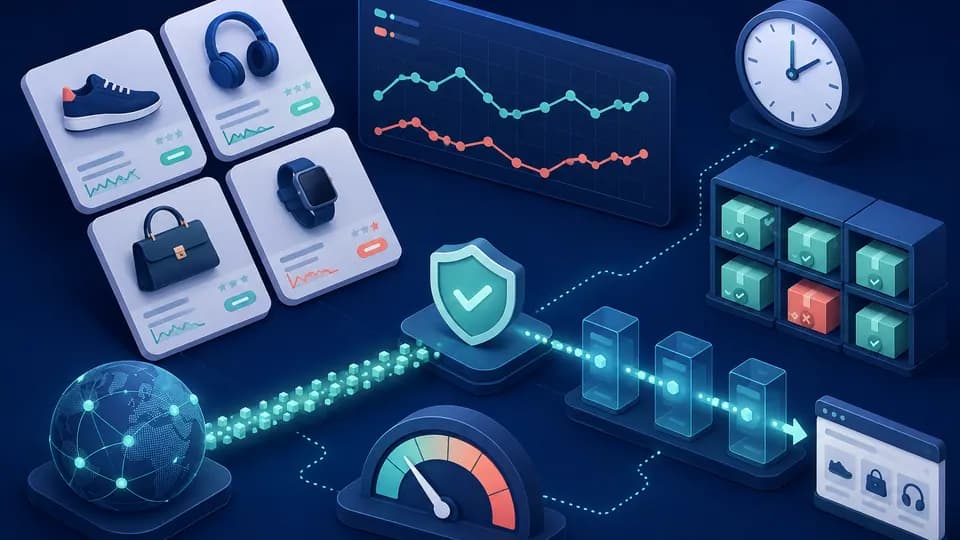
Separate representation size, encoded and decoded body sizes, and network transfer under gzip, Brotli, and connection reuse. This original WorldProxy guide cross-checks five standards and official sources, ties each conclusion to an observable stage, and uses only owned or explicitly authorized systems.
Core idea
Source-file size, encoded Content-Length, and billable route traffic measure different quantities. HTTP fields and transport add overhead, while the browser exposes a larger decoded resource after decompression.
For Compression and traffic accounting: file size versus wire bytes, split speed into connection latency, time to first byte, and transfer throughput. A tiny response mainly measures latency; a large file may hit the client or server link. Use a series of identical requests and a direct baseline from the same time window.
What the primary source establishes
Separate representation size, encoded and decoded body sizes, and network transfer under gzip, Brotli, and connection reuse.
The primary source, RFC 9110 — Content Codings, RFC 9112 — Message Framing, RFC 7932 — Brotli, RFC 1952 — GZIP, W3C Resource Timing, defines the technical baseline but not every client and provider configuration. Read the normative behavior with its version and then verify your implementation. Treat anything beyond the source as a product feature that needs separate confirmation.
Controlled lab
Publish 10 MiB of repeating text and 10 MiB of random data with correct content codings. Clear cache for three runs and add one warm run. Compare Resource Timing, origin bytes, and a test traffic-counter delta. Add a deliberately double-coded staging response and require a separate decoding failure.
Step-by-step verification
Serve a compressible corpus and pseudorandom file as identity, gzip, and br. Compare direct and proxied runs using encodedBodySize, decodedBodySize, transferSize, and an origin counter of bytes written.
Host a small latency response and a known-size file on a controlled server. Warm up once, then collect at least five direct and five proxied measurements. Use one connection for route testing and separately reproduce normal concurrency when evaluating the real application.
Record DNS, connect, TLS, first byte, total time, and bytes. Compare medians. A slow first request can indicate DNS, TLS, or a cold cache; slow large transfers point to capacity, loss, or server limits. Rotating an IP without these measurements proves nothing.
- Prepare compressible and random files
- Measure identity, gzip, and br
- Compare cold and warm
- Detect incorrect double encoding
Evidence to retain
Record content type, encoding, Content-Length, encoded, decoded, and transfer sizes, duration, protocol, cache state, and counter delta. Keep representations separate.
Include file size, endpoint region, access type, raw values, and median. A 10 MiB check measures the path from the client to the WorldProxy test endpoint through that proxy, not the speed of the whole internet. Treat fast HTTP errors as failed checks, not performance successes.
Define report columns and time format before the run. A result without context becomes a guess: the address, cache state, and changed condition are unknown. Record controlled failures as well as successes so the check proves that it can distinguish states.
Interpreting the result
Calculate throughput from a named byte counter and transfer phase. Provider counters and DevTools may differ through tunnel overhead, TLS, retries, and rounding; the difference alone does not prove incorrect accounting.
Cross-origin Resource Timing is restricted without Timing-Allow-Origin. Packet capture and provider accounting can measure different layers and directions.
One successful run confirms only one client, route, and moment. Repeat while changing one variable and state the limits. When observation conflicts with documentation, rule out cache, client version, and intermediaries before creating a reproducible support case.
Worked decision process
Define a measurement budget for Compression and traffic accounting: file size versus wire bytes: warm-up, five small requests, five known-file transfers, the same direct controls, fixed concurrency, and a pause between heavy cycles. Estimate billable traffic before running the test.
Separate latency from throughput. A small response exposes DNS, connect, TLS, and first-byte cost. A 10 MB file measures the path from the client to the WorldProxy endpoint through the selected proxy, not universal internet speed. Test a browser workload separately when connection reuse matters.
Confirm anomalies against a direct route, another exit in the same geography, and a delayed repeat. Keep median, spread, and failure count. A best result hides instability, while an average can be distorted by one hang.
Common mistakes
Do not compare morning Wi-Fi with evening Ethernet, different files, or different CDN nodes. Avoid unlimited timeouts and repeated heavy checks. They consume traffic and create their own queue. Run a bounded sample, pause, and repeat only anomalies.
Stop when errors rise, a source returns a limit, the task would require bypassing protection, or secrets enter logs. Save sanitized diagnostics and correct the cause first. More concurrency or another IP can hide the fault and add load without improving evidence.
Rollout and maintenance criteria
Define the decision boundary before rollout: which observation permits continuation, which requires review, and which stops the workflow. Record acceptable error ratio, maximum wait, and the owner of every exception so a temporary failure cannot silently become permanent configuration.
Review real load, cost, and quality after the first week. Schedule a small control after client, proxy-service, or network changes. Archive outdated instructions with their replacement date and reason so operators do not follow conflicting configurations.
Operational checklist
Turn the successful experiment into a short procedure covering owner, safe configuration, limits, and stop conditions. Every run needs a terminal status. After browser, library, or network changes, run a small control before the main queue.
- A direct baseline exists
- File and endpoint match
- Phases are recorded
- Median is used
- Errors are separate
- Measured path is stated
Sources
This WorldProxy article is original. Links point to the primary documents used for fact checking.
Choose a proxy for your workflow
Compare proxy families and browse all countries. Availability and price are checked before an item enters the cart.